
Sanitation Truck GPS Tracking for Waste Management Fleets
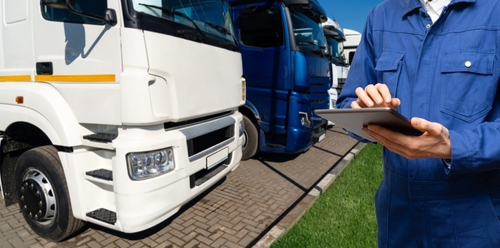
Sanitation truck GPS tracking puts every refuse and recycling vehicle on a live map and records where it went, when it stopped, and how it was driven. For waste fleets, that record does three jobs: it verifies completed routes, settles missed pickup complaints with timestamped data, and flags unsafe driving on residential streets.
A dot on a map is only the starting point. The value of GPS tracking for garbage trucks is the history behind the dot: arrival and departure times by street, idle time at the transfer station, and speed through school zones. This guide covers how waste management fleets use that data and what to look for before choosing a system.
Why Do Sanitation Fleets Need More Than Basic Vehicle Tracking?
A waste fleet’s biggest problems are things a simple location ping cannot prove on its own: whether a street was serviced, how long a truck idled, and how it was driven between stops. Route history, stop timing, and driver behavior data turn tracking into documentation.
Refuse routes are unlike most commercial routes. A single truck may make hundreds of stops a day on narrow residential streets, around parked cars, and through school zones. Every stop is a chance for a complaint, a delay, or a safety incident.
When a resident calls about a skipped cart, the hauler carries the burden of proof. Without GPS data, the answer depends on a driver’s memory and a paper route sheet. With it, a dispatcher can see exactly when the truck reached that street.
Documentation also matters beyond customer service. Private haulers working under municipal agreements, and public works departments answering to residents and councils, both need a defensible record of service performed.
How Does GPS Tracking Work for Garbage Trucks?
A GPS tracking device installed in each truck reports its location, speed, and ignition status to an online platform over a cellular network. Fleet managers see live positions, replay past routes, and set geofences that automatically log when a truck enters and leaves a defined area.
For a sanitation fleet, the most useful data points are:
- Live location: See where every truck is right now, so dispatchers can respond to breakdowns, road closures, and late-day add-on pickups.
- Route history and playback: Replay any truck’s day street by street to confirm when a route was run and in what order.
- Geofence entry and exit times: Draw virtual boundaries around streets, neighborhoods, transfer stations, or landfills, and log every arrival and departure automatically.
- Idle time: Measure how long engines run while trucks sit at the transfer station, the yard, or on breaks.
- Driver behavior alerts: Flag speeding, harsh braking, and rapid acceleration as they happen.
How Does GPS Tracking Verify Missed Pickup Complaints?
GPS tracking verifies a missed pickup by showing whether the assigned truck entered the resident’s street, when it arrived, and how long it stayed. That turns a “he said, she said” call into a lookup that takes minutes instead of a radio chase and a driver interview.
A typical verification workflow looks like this:
- The resident or municipal contact reports a missed pickup with the address and service date.
- The dispatcher pulls the route history for the truck assigned to that street on that date.
- The geofence log and playback show whether the truck entered the street, the time it arrived, and whether it slowed or stopped along the block.
- If the truck serviced the street, the dispatcher shares the timestamp with the resident or municipal contact. If it did not, the live map shows the nearest truck to send back.
One honest limitation: GPS confirms that the truck was on the street and stopped, not that a specific cart was emptied. A cart set out after the truck passed, or one blocked by a parked car, can still generate a valid complaint. The timestamp helps sort those cases quickly and fairly.
Can GPS Tracking Lower Fuel and Maintenance Costs for Waste Fleets?
Yes, when managers act on the data. GPS tracking exposes the three biggest sources of avoidable cost on refuse routes: excess idle time, off-route miles, and inefficient stop sequencing. Cutting those reduces fuel burn and wear on brakes, tires, and engines that already work hard in stop-and-go service.
Route playback often shows patterns that are invisible on paper, such as a truck doubling back across a neighborhood or two trucks covering overlapping streets. Idle reports show where engines run longest, so managers can set clear idling policies and coach the drivers who need it.
| Problem | What the GPS data shows | What managers can do |
|---|---|---|
| Missed pickup complaint | Route history and geofence timestamps for the street | Confirm service or send the nearest truck back |
| Excess idling | Idle time by truck, driver, and location | Set idling policies and coach specific drivers |
| Off-route or after-hours use | Route deviations and ignition-on times outside the schedule | Address unauthorized use before it becomes routine |
| Mid-route breakdown | Live positions of every nearby truck | Reassign remaining stops to the closest available truck |
| Disputed accident claim | Location, speed, and time at the moment of the incident | Provide objective records to insurers and claims adjusters |
How Does GPS Tracking Improve Driver Safety in Residential Areas?
GPS tracking improves safety by alerting managers to speeding, harsh braking, and rapid acceleration as they happen, so risky habits get coached before they cause a crash. On residential routes with pedestrians, cyclists, and children nearby, those alerts matter more than on almost any other commercial route.
The stakes are high for crews, too. Refuse and recyclable materials collectors had a fatality rate of 37.4 per 100,000 full-time equivalent workers in 2024, the fifth highest of any civilian occupation, according to SWANA’s summary of the 2024 BLS Census of Fatal Occupational Injuries.
Safety alerts work best with clear speed thresholds for residential and school zones and a regular coaching routine. Many fleets also pair tracking with dashcams with integrated telematics, so a harsh braking alert comes with video showing what happened in front of the truck.
Driver buy-in improves when tracking is framed as protection rather than surveillance. The same records that flag a hard stop also show that a driver ran the full route on time, or was traveling under the limit when another vehicle caused a collision.
How Does GPS Data Support Municipal Reporting and Contract Renewals?
GPS route history gives waste fleets a timestamped record of service that can be exported and shared with municipal partners. Instead of assembling paper logs, managers can show which routes ran, when each area was serviced, and how quickly complaints were resolved.
For private haulers, a documented service record strengthens the case at renewal or bid time, because it answers performance questions with data rather than assurances. For municipal sanitation departments, the same records help respond to residents, support budget requests, and show accountability for public vehicles.
What Should You Look For in a Sanitation Fleet Tracking System?
Look for a system that records detailed route history, supports geofencing, and produces reports you can share without manual cleanup. Equally important are hardware suited to heavy trucks and a provider that will help you configure it for refuse routes.
- Frequent location updates: Dense residential routes need enough detail to confirm individual streets, not just general areas.
- Geofencing and stop reports: Automatic entry and exit logs are the foundation of missed pickup verification.
- Historical playback and exportable reports: You need to pull a specific truck’s day quickly and share it with a resident or municipal contact.
- Driver behavior alerts: Speeding and harsh driving alerts with adjustable thresholds for residential zones.
- Dashcam compatibility: Video adds context to safety alerts and accident claims.
- Flexible purchase or rental options: Renting units lets a fleet test tracking on a few routes before committing to the whole fleet.
- Responsive, personal support: Setup, geofence configuration, and reporting go faster with a team that knows your operation.
How GPS Technologies Supports Waste and Sanitation Fleets
GPS Technologies is a family-owned company that has provided GPS tracking to businesses and fleets nationwide since 1998. Instead of a one-size-fits-all enterprise package, the team works directly with each fleet to set up tracking around its routes, vehicles, and reporting needs.
Waste and sanitation fleets can start with our GPS fleet tracking systems for live location, route history, geofencing, and driver behavior alerts. Fleets that want to test tracking on a few trucks first, or cover seasonal routes, can use our GPS tracking rental devices as an alternative to buying hardware. You can also see how tracking supports other industries we serve.
Want to see the platform before you talk to anyone? Try the live GPS tracking demo. To discuss tracking for your sanitation fleet, call (847) 382-5107, 8 a.m. to 5 p.m. Central, Monday through Friday, or contact our team online.
Frequently Asked Questions About Sanitation Truck GPS Tracking
How does GPS tracking work for garbage trucks?
A tracking device in each garbage truck reports location, speed, and ignition status to an online platform over a cellular network. Managers can watch trucks live, replay routes street by street, and set geofences that log arrival and departure times automatically. That history is what lets a fleet verify service, measure idle time, and review driver behavior.
How does GPS tracking resolve missed pickup complaints?
When a resident reports a missed pickup, the dispatcher pulls the assigned truck’s route history for that date. Geofence logs and playback show whether the truck entered the street, when it arrived, and whether it stopped. If it serviced the street, the timestamp settles the question. If not, the live map shows the nearest truck to send back.
Can a standard fleet tracking system work for a waste fleet?
Yes, as long as it offers detailed route history, geofencing, idle reporting, and driver behavior alerts. Those features cover the core needs of most sanitation fleets: verifying routes, resolving complaints, controlling fuel costs, and improving safety. The key is configuring geofences and alert thresholds around your actual collection routes and residential zones.
Will drivers resist GPS tracking?
Some drivers worry about being watched, but resistance usually fades when tracking is introduced openly and framed around safety and protection. The same data that flags a hard stop also proves a driver completed the route on time or was not at fault in a collision. A written tracking policy and clear communication up front help build trust.
Can a fleet try GPS tracking before buying devices?
Yes. Renting tracking units lets a sanitation fleet test GPS on a few trucks or routes and measure the results before deciding whether to buy for the whole fleet. Renting also works well for seasonal routes or temporary service areas where buying hardware outright does not make sense.
Categorised in: Fleet Tracking
This post was written by GPS Technologies Team
Comments are closed here.